Let's start with a fact that clears everything up at once: all merino wool is wool, but not all wool is merino. The difference isn't a marketing nuance, it comes down to fiber fineness (measured in microns) and the breed of sheep. The Merino, originally from Spain and today raised mostly in Australia and New Zealand, grows a fleece far thinner than ordinary wool.
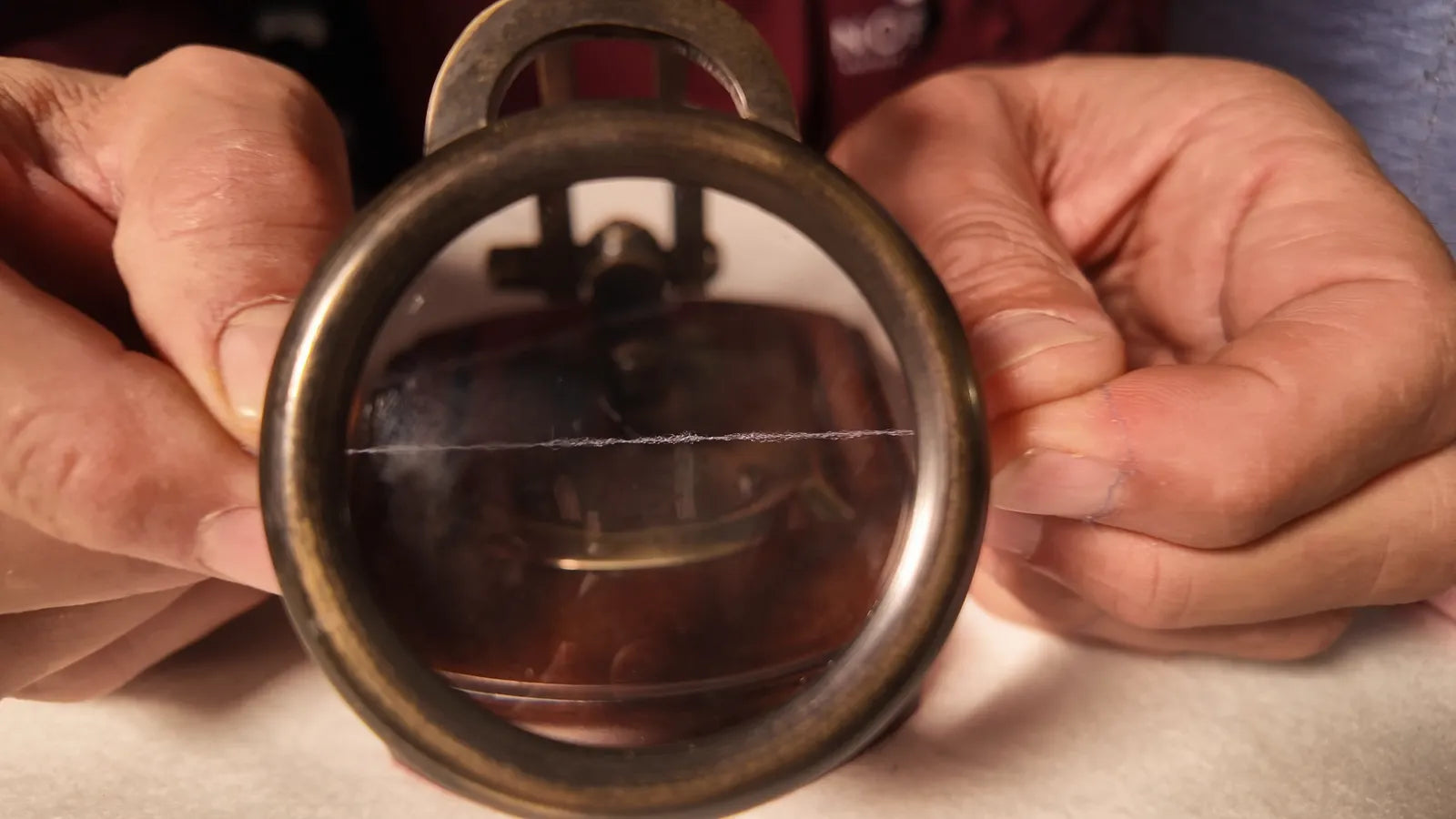
The number that really matters is the micron, the diameter of a single strand. Traditional raw wool ranges between 25 and 40 microns: that's the one you feel prickling your calf, leaving an itchy sting after half a day. Merino stays under 24 microns, and in the finest grades it drops below 19. At that thinness the fiber becomes almost imperceptible on the skin.
From this fineness come three benefits you notice right away, not in theory. First, less itch: such fine fibers bend on contact instead of pressing, so there's no rough feeling. Second, more softness, a silky hand even against bare skin inside the sock. Third, genuine temperature control: merino holds warmth when needed and breathes when the foot heats up, keeping it dry for hours.
A simple daily gesture shows it. A raw-wool sock you pull off at the end of the day with relief, because it marked and irritated you. A real merino sock you forget you're wearing: it's the comfort you want in a meeting, while travelling, or under a tailored suit, without ever thinking about it.
In the next sections we'll see how to recognise authentic merino (what to read on the label, what to be wary of) and when it's truly worth choosing in men's socks, depending on the season and the occasion. Because the difference, at your feet, is measured in fineness and in supply-chain care: the same logic with which, in Racale, we select noble yarns and press every pair by hand, slowly.
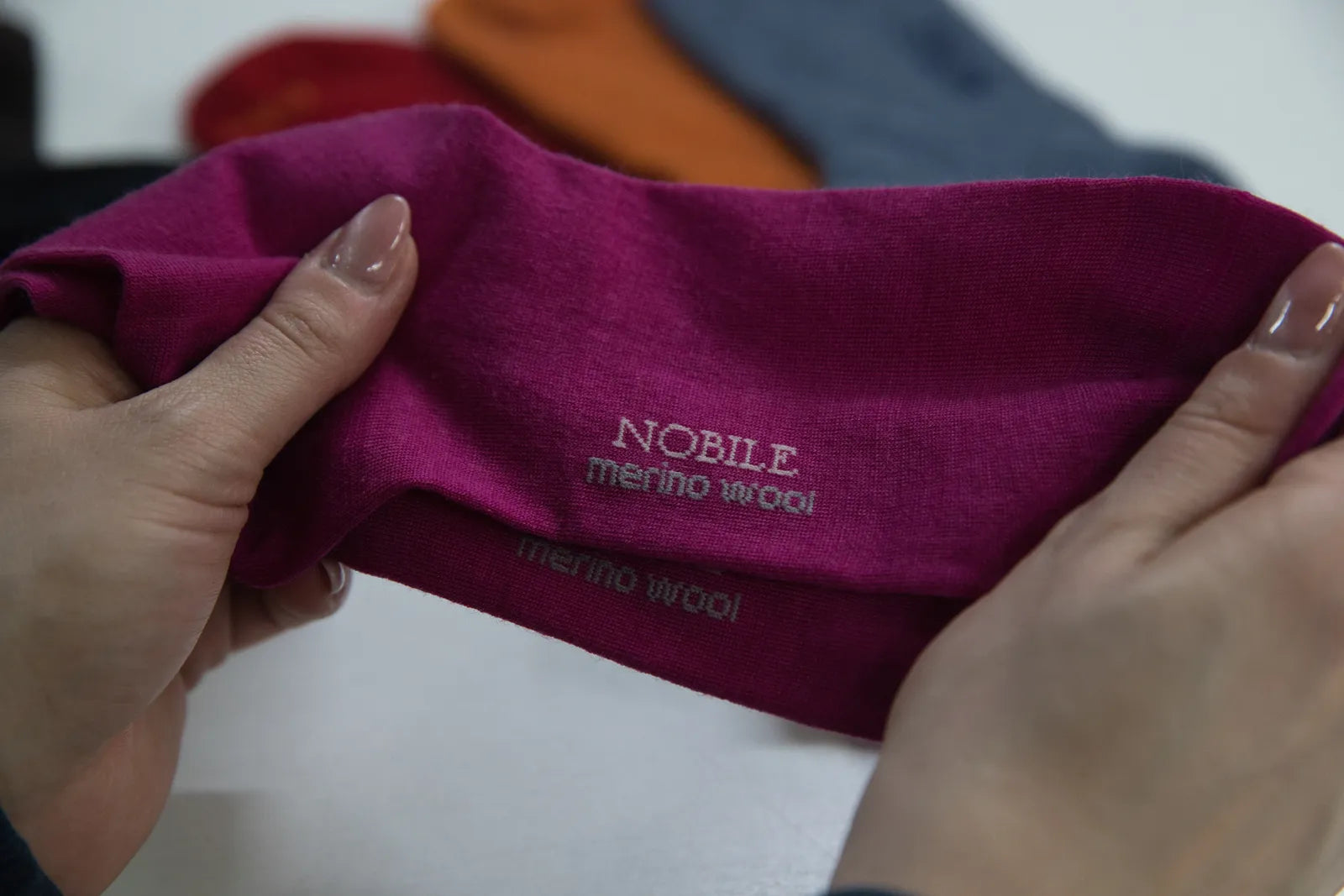
What a Micron Is and Why It Decides Everything
A micron is one thousandth of a millimeter, and it measures the diameter of a single wool fiber. It sounds like a detail for technicians, but it is the number that decides whether a sock pampers your skin or has you scratching your calf by mid-afternoon. The thinner the fiber, the softer it feels and the gentler it is on the skin.
There is one threshold worth remembering: below 25 microns the fiber stops irritating the skin's itch receptors. Above that value, the tip of each fiber is stiff enough to press on the nerve endings and give you that prickly feeling everyone associates with a scratchy old sweater.
The real classes work like this, and each has a concrete use:
- Coarse wool (30-40 microns): rugs, padding, rough outdoor sweaters. Durable, but unmanageable against bare skin.
- Medium wool (25-30 microns): sturdy knitwear, structured garments. Right at the edge of the itch threshold.
- Merino (18-24 microns): the range that changes everything for quality clothing and socks.
- Extrafine merino (below 18.5 microns): softness for sensitive skin, ideal for anyone in closed shoes all day.
- Superfine (below 17.5 microns) and ultrafine (below 16 microns): rarities close to silk, for high-end tailoring.
This is why a fine merino sock does not prickle after ten hours in a closed shoe. The thin fibers flex instead of poking, absorb moisture without feeling wet, and keep the foot dry even during meetings or travel. For the manager or surgeon who switches environments ten times a day, it is the difference between a calm day and constant discomfort.
Now the real objection: reading "merino" on a label is not enough. That word covers the entire 18-24 micron range, and two socks with the same name can behave in opposite ways. What counts is the declared micron. If a maker stays silent about it, they probably picked the high end to cut costs. Quality is judged by the number, not the wording, a principle that holds for every noble yarn and explains well what truly makes a sock high quality.
Wool grades read by the micron
The micron measures the diameter of a single fibre in thousandths of a millimetre. Below 25 microns the fibre stops triggering the skin's itch receptors, which is why a fine merino sock stays soft even after ten hours in a closed shoe. On the label, reading "merino" isn't enough: the stated micron is what counts.
Thick, stiff fibre. It prickles on contact because it exceeds the skin's tolerance threshold. Tough but rough.
Just above the 25-micron threshold. Bearable over other layers, but worn directly against the skin it still becomes uncomfortable over time.
Below the itch threshold. A soft fibre that doesn't irritate, breathes and regulates temperature. The right range for a sock that stays comfortable all day.
Silky hand and a noticeable lightness. It wraps the foot without excess bulk, ideal inside smart closed shoes.
The pinnacle of fineness. A fibre imperceptible on the skin, comparable to silk for softness. Rare and precious.
The circle is the fibre's cross-section, the line its profile: the thinner and more crimped it is, the softer it feels on the skin.
Classic Wool vs Merino Wool: The Comparison That Actually Matters
The difference starts with a number: the fiber diameter, measured in microns. Classic wool from common sheep sits between 25 and 40 microns, while merino falls between 18 and 24, and extrafine grades drop below 18.5. The threshold matters: around 25 microns the skin starts to read the fiber as scratchiness. That is why merino doesn't itch, and ordinary wool so often does.
In short, merino wins on softness, lightness and breathability, but it asks for careful handling. Classic wool stays tougher and warmer, at the cost of a coarser hand. To apply this choice to a cold-weather wardrobe, read how to choose the right socks for the cold season.
| Criterion | Classic wool | Merino wool |
|---|---|---|
| Fiber fineness | Thick fiber, typically above 25 microns, rough surface to the touch | Fine fiber, between 18 and 24 microns (extrafine drops below 18.5), far smoother |
| Feel on the skin | Tends to prickle and itch, especially around the ankle and calf | Soft and gentle, no itch even in direct contact for hours |
| Thermoregulation | Warms a lot but holds heat rigidly, little adaptability | Adjusts the temperature to the body, a warm foot in the cold and cool while travelling |
| Moisture and odors | Absorbs moisture but dries slowly, can hold onto odors | Wicks moisture away and stays odorless longer, a dry foot for up to 10 hours |
| Weight and bulk | Heavier, bulkier yarn, a thick sock that feels cumbersome in the shoe | Light, thin yarn, comfortable even inside closed dress shoes |
| Stretch and fit | Good support but a stiff fit, less snug against the leg | Elastic fiber that follows the leg, a sock that stays up all day long |
| Care and felting | More hard-wearing but felts easily with hot water and spin cycles | Needs a gentle wash at 30 degrees and flat drying to stay intact |
| Typical uses | Technical socks, mountain, intense cold, outdoor use | Everyday wear, the office, travel and mid-seasons, all-day comfort |
Why Merino Doesn't Itch (and Grandma's Sweater Does)
Itching isn't an allergy, as many assume. It's a matter of mechanics. When a wool fibre touches the skin and gets pressed, it can either bend or stay stiff. If it stays stiff, its tip pushes against the shallow nerve receptors, and the brain reads that pressure as a prickling sensation.
It all comes down to fibre thickness, measured in microns. Above 25 microns a fibre is too thick to flex: it stays straight, prickles and irritates. That's exactly the raw wool of grandma's sweater, where many fibres exceed 30 microns. Quality merino, by contrast, sits below 19 microns, so fine that at the slightest contact it bends without ever pressing.
Then there's the surface of the fibre. Every strand of wool is coated with overlapping cuticle scales, like roof tiles. In coarse wool these scales are irregular and aggressive, trapping heat unevenly and increasing friction against the skin. A serious finishing process smooths and aligns them, cutting both the rubbing and that typical warm, clammy feeling.
For anyone with sensitive skin on the calf, this changes the whole day. People who stand for hours, or move from the cold outside into an overheated office, know the red mark and that nagging heat by the end of a shift. A sock in fine merino, slowly knitted and hand-finished, avoids irritation precisely because the fibres flex instead of pressing.
The second advantage is thermoregulation. Merino pulls moisture away from the skin, keeping the foot dry even after ten hours inside a closed shoe. No overheating, no damp feeling, no chill from sweat. If you want to make the most of this depending on the weather, we explained how to choose the right socks for the cold season, warm in winter and cool in the shoulder months.
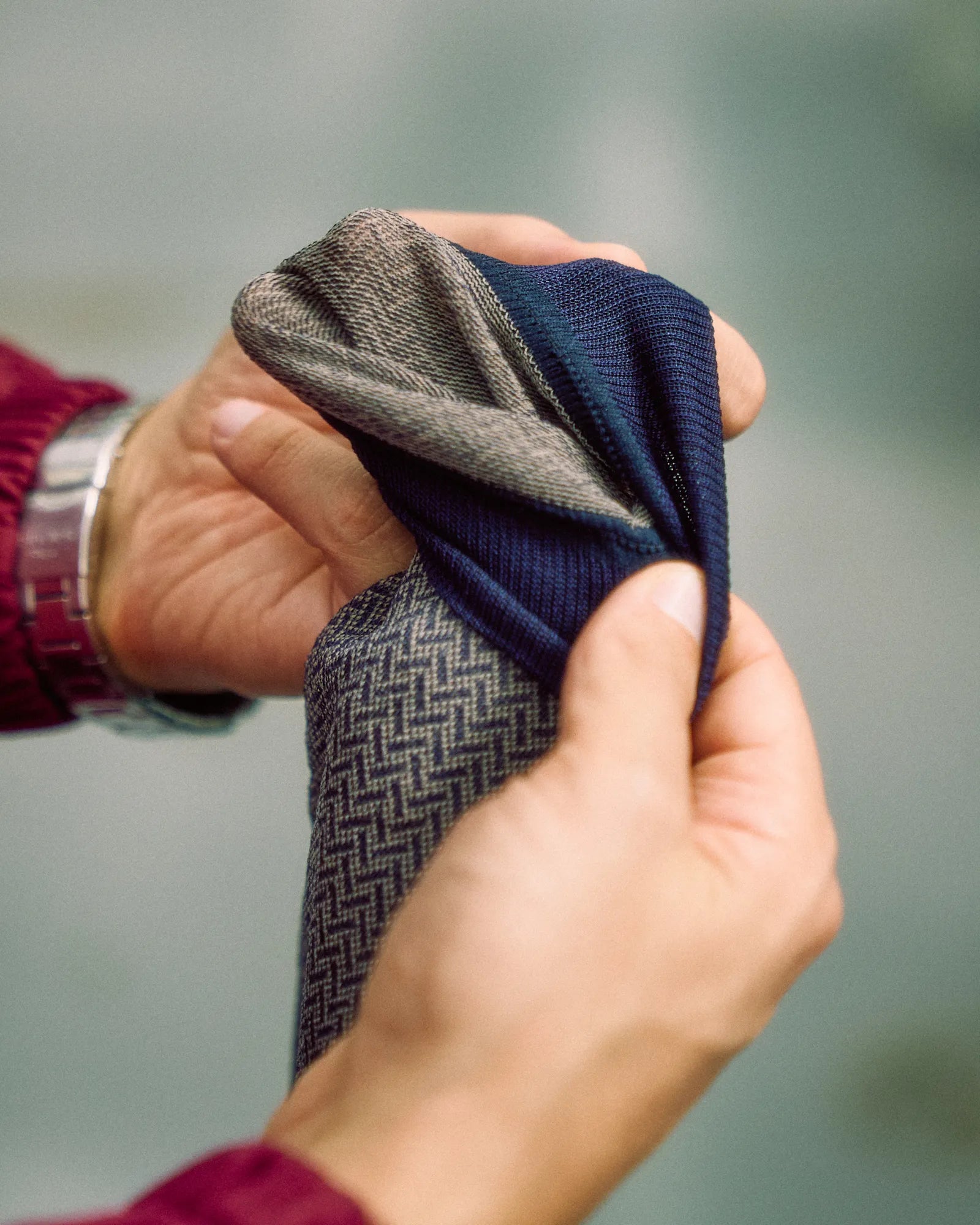
Thermoregulation: Warm in Winter, Cool in Summer
Merino seems to contradict itself: it keeps you warm in the cold and stays cool when your foot heats up. The secret is the shape of the fiber, crimped like a tiny spring, folding back on itself thousands of times per centimeter and creating countless pockets of still air.
That trapped air is the real blanket. In winter it insulates and holds your body heat close to the skin, so damp cold stays outside the shoe. When you board a heated train or walk into a warm office, the same structure lets the excess heat drain away instead of trapping it. The sock works in both directions, on its own, without you noticing.
Then there's moisture management, where merino clearly outclasses ordinary wool. The fiber absorbs up to 30% of its own weight in moisture while staying dry to the touch: it captures sweat as vapor before it condenses into a droplet. You feel the result after many hours in a closed shoe, when your foot is still dry and the temperature steady.
Picture a real day: a work flight in the morning, shoes laced since dawn, layovers, a waiting room, then the late-afternoon meeting. With a synthetic sock you arrive with a hot, clammy foot. With merino you arrive with a dry foot, a regulated temperature and no smell to hide before you slip off your shoes.
Classic wool, coarser, keeps you warm but handles moisture worse: it holds it, grows heavy and turns cold and thick against the skin the moment you stop moving. A heavy feeling, the opposite of the lightness you want inside a smart shoe.
There's also a benefit that lasts. Merino is odor-resistant with no chemical treatment: the keratin and lanolin naturally present in the fiber limit the bacteria behind bad smells, so the sock stays fresh even at the end of the day. To match the right fabric to the climate, read how to choose the right socks for the cold season.
Tasmania, Superfine and the Labels You See on the Tag
On the tag of a garment or a pair of socks you often find words that sound luxurious but, on their own, say very little. Micron is the only measure that really counts: it tells you the average diameter of the fibre, and the lower the number, the finer, softer and gentler the wool feels on the skin.
There is a fairly recognised hierarchy. Generic merino can reach 23-24 micron, far from the silky feel many people expect. Extrafine merino sits around below 18.5 micron, superfine below 17.5, and ultrafine drops under 16 micron, a rare and expensive territory.
The term Tasmania wool refers to merino raised in Tasmania, prized for its fineness and for a historically careful processing. It is a prestigious geographic reference, not a certification: it means something only when paired with a real micron figure, otherwise it stays pure suggestion.
The Woolmark label is a different matter, certifying composition and quality standards on virgin wool. Seeing it helps, but it alone won't tell you how fine the fibre is: a Woolmark garment can still be made with 22 micron wool. That's why the certification should be read alongside the rest, not instead of it.
Keep a short mental checklist when you read a tag: the stated micron (if it's missing, be suspicious), the real origin, any treatment such as superwash, and the percentage of wool in the overall yarn. A sock can say "merino" while being only 30 per cent wool, the rest polyamide and elastane.
Reading the label well lets you choose the right fineness for a tailored suit without being led by a grand-sounding name, and understand why a fibre under 18 micron doesn't itch and manages moisture better. If you want to go deeper into pure versus blended, we explained what truly makes a sock high quality.
Pure Merino or Blended: What Changes in Socks
A 100% merino sock sounds like a promise of purity, but in practice it barely exists, and for good reasons. Wool fiber on its own has no elastic memory: after a few hours on the foot it tends to give way, slide toward the ankle and bag over the instep. That is why a well made technical yarn always includes a small share of elastic fiber and a targeted reinforcement on heel and toe.
Polyamide adds abrasion resistance where the sock works hardest, heel and toe, and extends the life of the pair without adding weight. Elastane, in minimal amounts around 2-4%, provides the fit that keeps the sock up for ten hours without squeezing: a detail you notice right away, because it leaves no red mark on the calf at the end of the day.
Then come the noble blends. Mulberry silk paired with merino brings a liquid softness and a subtle sheen, ideal under a tailored suit. Hircus goat cashmere adds an impalpable, almost weightless warmth, perfect for a winter sock that never crowds a classic shoe. Our merino starts from fine fiber below 19 microns, knitted in Racale on 240 needle machines, with a slow hand pressing that sets the shape pair by pair.
Reading a blend is simple: check the label. A good sock reads something like 70% merino, 25% polyamide, 5% elastane, with the noble yarn as the dominant component. When you see polyamide or polyester above 30-40%, you are almost always looking at a cheap sock in disguise: synthetics warm poorly and breathe far less than natural fiber, so the foot stays damp and the fabric wears out sooner.
In our range this logic takes concrete shape, for instance in the merino and silk socks designed for winter tailoring, where the fine fiber governs the hand and the technical reinforcement stays hidden exactly where it is needed. To understand the criteria better, read what truly makes a sock high quality.

Merino, Filoscozia, Silk and Cashmere: Which for Which Occasion
Every noble yarn has its ideal ground. Merino wool shines when the weather turns cold and damp: a ten-hour work trip through airports, cars and overheated meeting rooms is its perfect test. Its thermoregulation keeps the foot dry and at a steady temperature, without the overheating that ruins the day.
Fineness makes the difference. Quality merino is measured in microns: below 19 microns the yarn stays as thin as a summer sock, yet it warms without itching. That's why good merino sits under a dress shoe without bulking up, something impossible with coarser wools above 24 microns.
When the days soften, from April to September or roughly above 15 degrees, merino becomes too much. That's where genuine certified Filoscozia steps in, a gassed and mercerized Makò cotton that stays compact, luminous and smooth: crisp elegance under a mid-season suit. You can see it up close among our merino wool socks and Filoscozia lines.
Mulberry Silk and Hircus goat Cashmere move up another register. Silk brings a cool hand and a discreet sheen: when you slip off your shoes at an evening event and only the sock remains, that's where the care shows, initials included. Cashmere is peak enveloping comfort on harsh days, a softness that warms without squeezing and leaves no red mark by the end of the night.
To find your way season after season, the guide on how to choose socks for the cold season is a useful read.
One point remains: a fine yarn only performs if the craftsmanship respects it. In our workshop in Racale, near Lecce, every pair is made on 240-needle machines, with slow hand-finishing and a check on each pair. It's this transparent supply chain that ensures merino reaches the foot with the softness and hold it was chosen for.


Mistakes to Avoid When Choosing Merino Wool
There's a precise moment when many men stop trusting wool: the big-name sock pulled out of the machine after two washes, felted, stiff, suddenly a size smaller. The name on the box promised something, the price did too, yet the result lets you down. Behind it there's almost always an avoidable mistake, sometimes at the purchase, sometimes in the wash.
The first one is on the label. Trusting the word "merino" alone isn't enough: it names the sheep breed, not the fineness of the yarn. Without a declared micron value you're buying blind. Merino at 24 microns can prickle, merino at 17.5 microns feels like a caress. Always ask for the number, and when nobody shares it there's usually a reason.
A second misunderstanding: confusing thickness with actual warmth. A bulky sock doesn't automatically keep you warmer. Warmth comes from the air pockets the fibre traps and from its ability to regulate temperature, not from the weight of material. To understand how the same merino stays warm in winter and dry in summer, it helps to read how to choose the right socks for the cold season.
Watch out for 100% merino with no reinforcement at all. Pure merino is wonderful against the skin, but at the heel and toe, where abrasion is constant, it wears through quickly. A small share of polyamide in the stress zones doesn't betray the yarn's quality, it protects it. That's the difference between a pair that lasts a season and one that stays with you for years.
Then comes the step that does the most damage, washing. Heat opens the fibre scales and locks them together irreversibly, and that's exactly how felting begins. Three habits are enough:
- Wash at 30 degrees or by hand, with a neutral detergent and no fabric softener.
- Skip the harsh spin cycle: press gently and dry them flat.
- Never in direct sun, never on a radiator: dry heat makes the fibre brittle and yellow.
Last and underrated mistake: picking a size that's too tight. Merino lives on its natural elasticity, and when you constrain it the recovery fades, the sock slips and marks your calf. Choose the correct size and consider the right length too. For care, everything is covered in how to fold and store them to make them last.
How to Wash and Care for Merino Wool Socks
The first rule is also the most counterintuitive: merino needs washing less, not more. The fibre contains lanolin and a scaly structure that naturally repels odour and bacteria, so after a day at the office airing your socks overnight is often enough to refresh them. Frequent travellers notice it immediately: the same pair survives two or three wears without smell, something unthinkable with a synthetic sock.
When a wash is genuinely needed, turn them inside out to protect the outer knit. Hand wash in lukewarm water or use the wool cycle in the machine, never above 30 degrees. Choose a neutral detergent, ideally one made for delicates, and skip the harsh fabric softener: it weighs the fibre down and reduces its elasticity. No bleach, ever.
After washing, don't wring the socks to squeeze them out. Press them gently between your hands or roll them in a towel to absorb excess water, then lay them flat to dry, away from radiators, heaters and direct sun. Heat is merino's real enemy: it causes felting and strips away the softness that makes it so kind on the calf. If needed, a light press at low temperature is more than enough.
The tip that truly makes the difference is rotation. Don't wear the same pair two days running: alternate at least three or four pairs and let each rest for 24 hours between wears. The fibre recovers its original shape, the cuff springs back, and the sock lasts far longer. With this routine a well-cared-for merino sock comfortably handles over 100 washes while keeping its grip and comfort.
To complete the care, how you store them matters too: discover how to fold and store them to make them last without stretching the cuff.
Yarn care
How to wash merino wool socks and make them last
Merino asks for little, but it asks for the right things. A few correct steps and a well-kept pair stays with you for years, as soft as day one.
What you need
-
1
Turn the sock inside out before washing
Flip the sock inside out: you protect the outer fibres and wash away sweat and dead cells from the inside, where they build up most. A simple move that reduces visible wear and keeps the colour vivid for longer.
-
2
Hand wash or wool cycle at 30 degrees
The ideal is lukewarm water by hand, no more than 30 degrees. In the machine, use only the wool or delicates programme, with a reduced spin. Hot water and harsh cycles are the real enemies of merino: they shorten the fibres and make them felt.
Recommended product: Nobile Essential, Long Merino Wool Sock
-
3
Neutral detergent, never harsh fabric softener
Choose a neutral detergent or one made for wool. Avoid harsh softeners and above all bleach, which breaks down the fibre structure. Merino is naturally soft and needs no additives to stay that way.
-
4
Squeeze without wringing
Never wring a wet sock: you risk distorting the knit and stretching the cuff. Press gently between your hands or wrap it in a clean towel and dab to draw out the excess water.
-
5
Dry flat, away from heat
Lay the sock out flat on a clean surface, away from radiators and direct sun. Direct heat stiffens and shrinks the fibre. Drying flat keeps the original shape of the foot and the leg.
-
6
Light ironing only if needed
In most cases there is no need to iron. If you want a tidier look, use the iron on a low setting with a cloth in between. Our slow hand pressing at the finishing stage already does most of the work.
-
Expert tip
Merino is self-cleaning: its natural lanolin keeps odours away. Before washing, ask yourself whether a night in the air is enough: often it is, and every wash you skip is extra life for the fibre.
Merino the Nobile Way: Yarn, Craftsmanship, Result
The gap between any merino and a merino that stays soft for years begins before the knit, in the yarn we select. We start from a fine-fibre merino wool with a low micron count: that is the technical detail deciding whether you feel itch or a soft touch. The thinner the fibre, the less the ends prickle the skin, and the discomfort so many complain about simply never shows up.
The chosen yarn becomes a sock in Racale, in the province of Lecce, on 240-needle machines. That number matters: more needles mean a denser, more even knit, so a compact, elastic surface that follows the foot with no weak spots. The same density holds the sock up at the calf without squeezing, so the red mark at the end of the day disappears.
After knitting comes slow hand pressing, pair by pair. It is not a flourish: it sets the shape, stabilises the weave and keeps the cuff elastic without that stiff band cutting off circulation during a meeting or a long flight. Anyone on their feet ten hours or travelling feels it at once, the foot stays dry and the sock does not slip inside the shoe.
Every pair goes through an individual quality check, with a transparent supply chain we can trace from yarn to shelf. For those who choose premium for substance rather than logo, that is the concrete guarantee behind the softness. If you want to understand what truly makes a sock high quality, you will find the criteria we apply there. And to round out your choice it helps to be choosing the right length too.
The result comes down to a few precise sensations: no itch, a dry foot all day, a sock that leaves no mark and never falls. This is merino as it should be, made in Italy, built to last. Try a pair of Nobile merino and judge from the very first wear.
Glossary
Merino wool labels, finally explained
On the label you find commercial names that look like guarantees but often say very little. Here is what they really mean, so you can read a tag without being misled by the marketing.
Merino
Wool from the Merino sheep. On its own it says nothing about fineness: the generic wording can reach 23-24 microns, far from the finest qualities.
Extrafine Merino
A finer fibre, generally under 18.5 microns. Softer against the skin and less prone to that prickly feel of ordinary wool.
Superfine
A higher grade of fineness, usually under 17.5 microns. Silky and light, well suited to garments in direct contact with the skin.
Ultrafine
The very top of the selection, under 16 microns. Rare and costly, reserved for the noblest yarns for softness and comfort.
Tasmania Wool
Merino raised in Tasmania, prized for the fineness of the fibre and the care in its processing. A prestigious geographical mark, not a technical micron figure.
Woolmark certification
A certification mark that attests to the wool content and the product's quality requirements. A useful reference, but always read the microns and percentages too.
Micron
The unit that measures the diameter of the fibre. The lower the number, the finer and softer the wool. It is the most honest figure to look for on a label.
Wool percentage
The real share of wool in the overall yarn. A fine merino blended with too many synthetic fibres loses much of its quality.
Label checklist
Four things to check: stated microns, origin, any treatments and the wool percentage in the yarn. If they are missing, be wary of the promises.
No term found. Try another word.
Frequently asked questions
What's the real difference between wool and merino wool?
Merino wool is a type of wool from the Merino sheep, with far finer fibers than regular wool, usually under 24 microns against 25-40 for coarse wool. That fineness makes it soft, non-itchy and better at regulating temperature. All merino is wool, but not all wool is merino.
Does merino wool itch?
No, if it's genuinely fine. Below 25 microns the fiber bends against the skin without triggering itch receptors, so good merino stays imperceptible even in direct contact for hours. If you feel itch, it's likely not extrafine or the yarn is low quality.
Does merino wool keep you warm or cool?
Both. The fiber's natural crimp creates insulating air pockets that trap warmth in winter, while its ability to absorb moisture while staying dry helps release excess heat when it's warm. That's why it works both in winter and for long days in closed shoes.
What does Tasmania merino wool mean?
It refers to merino raised in Tasmania, an Australian region known for especially fine fibers and quality processing. It's a prestige geographic label, not a different fiber, and usually comes with low micron values. It's still worth checking the stated micron count on the label.
Can merino wool socks go in the washing machine?
Many can, on a wool cycle at 30 degrees with a neutral detergent and no harsh softener. Turn them inside out, skip the heavy spin and dry them flat away from heat sources. Hand washing stays the safest choice to make them last.
Why are merino socks almost never 100% wool?
Because a sock needs elasticity and durability in high-stress zones like heel and toe. A small amount of polyamide or elastane ensures fit and longevity without losing softness. A high synthetic percentage, however, signals a cheap sock where merino is more slogan than substance.
Does merino wool hold odors?
On the contrary, it's naturally odor-resistant. The keratin in the fiber limits the bacteria that cause bad smell, so it can be worn longer between washes. Often airing the socks out is enough to freshen them, without washing every time.
Which wool should I choose for business travel socks?
Fine merino is the best choice for travel: it manages moisture, keeps the foot dry for hours in closed shoes and stays odor-free even after a long day. Look for extrafine merino with a light elastic reinforcement, so the sock won't slip or leave a mark on the calf.