End of the day, you take off your belt and spot the red mark the waistband left on your side. Or you have been standing for two hours at an event and feel your boxer slowly rolling up your inner thigh, turning every step into a small nuisance to manage. These are details no one else notices, but they stay in your head far more than you would like.
Underwear is the first layer, the only one that stays against your skin for sixteen hours straight. No one sees it, yet you feel it in every move: when you sit, walk, drive, stand through a meeting or spend eight hours on a long-haul flight. Here, quality has nothing to do with looks. It is pure function.
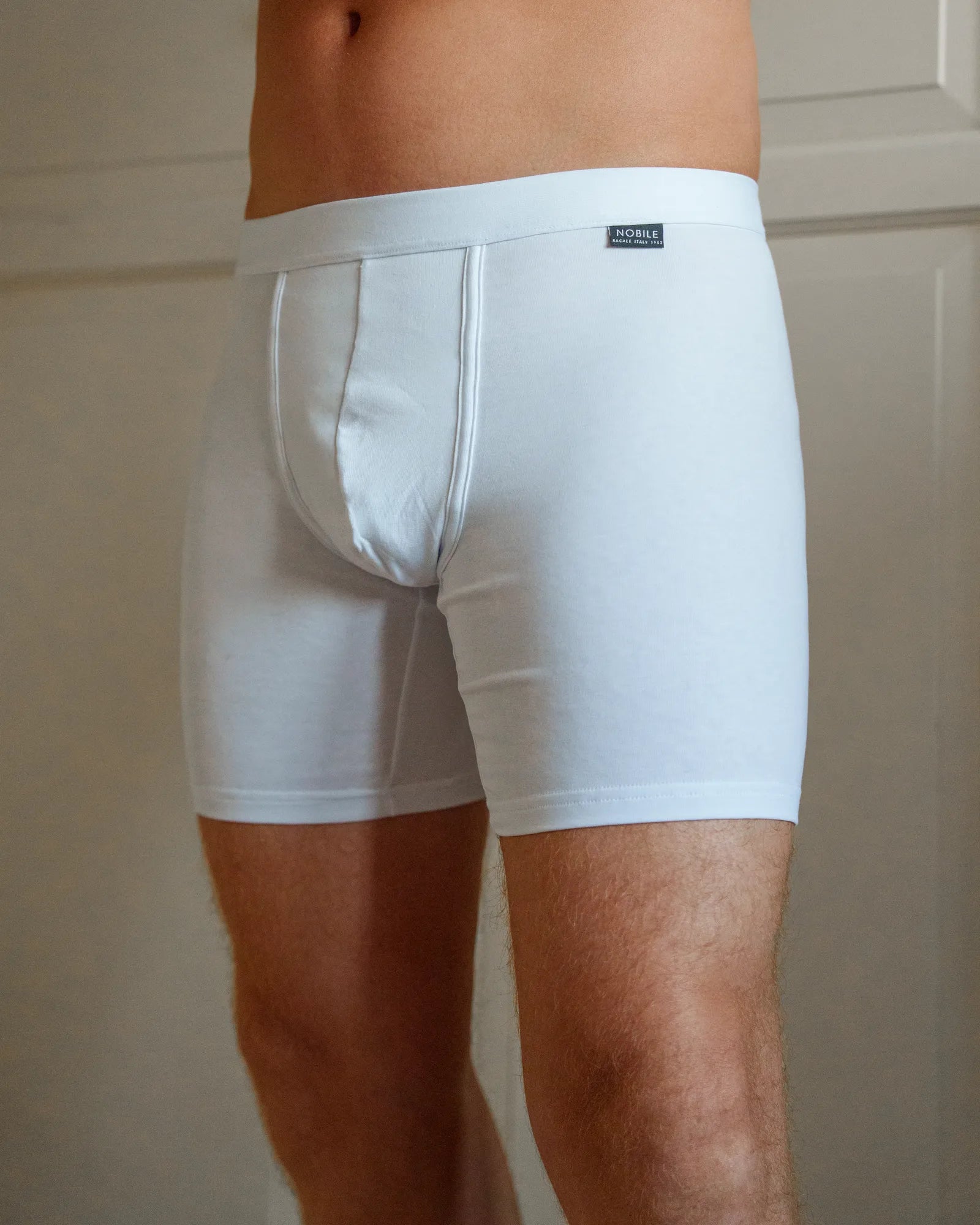
A good garment shows itself through four concrete things, not the name printed on the elastic. The yarn, which decides how much you breathe and how dry you stay. The seams, flat or raised, which at day's end make the difference between smooth skin and skin chafed red. The waistband, which can support without squeezing or leave a groove on your side. And durability, because a garment that loses shape after ten washes was never quality, just expensive.
In the sections ahead we go into detail on each of these elements, with practical examples and verifiable numbers. They matter for anyone chasing maximum comfort through a long day and for anyone who wants a fine garment that lasts for years. They are, in the end, the same criteria we use for quality socks: the garment changes, the logic does not.
What Actually Makes Underwear High Quality
The gap between a piece that lasts for years and one that gives up after a month isn't visible on the shelf. You feel it by touch, and you truly understand it only after twenty washes. Four elements make the real difference, and they're worth knowing before you buy.
- The yarn, which drives softness, durability and breathability.
- Flat seams, which decide whether your skin stays free or marked.
- The covered waistband, the part that either digs in or leaves you alone.
- Shape retention over time, wash after wash.
The Yarn: Why Fiber Length Matters
Not all cotton is the same. Short-staple cotton creates many micro ends that, within weeks, form the classic pilling, those rough little balls that make fabric unpleasant and turn it almost see-through in high-friction areas.
Extra-long staple Makò cotton works the opposite way. Its fibers run beyond 35 mm in length, against the 25-28 mm of common cotton, which allows a finer, more compact and smoother thread with fewer loose ends on the surface. The result stays soft and opaque even after cycle upon cycle in the machine. Our blend, 90% extra-long staple Makò cotton and 10% elastane, pairs that stability with an elastic recovery that doesn't lose shape. It's the same care we put into our sock yarns, as we explain in why the right cotton matters in socks too.
Flat Seams and Covered Waistband
Flat seams are the ones that don't build bulk against the skin. A traditional raised seam rubs during hours of sitting and, by the end of the day, leaves its red mark along the inner thigh or on the hip, where the fabric presses against the trouser waistband. Anyone spending ten hours between operating room, airport and meetings notices it right away.
The waistband is where most cheap pieces fail. An exposed elastic loses tension within twenty washes, rolls up on itself and starts to pinch, leaving that annoying groove around the waist. A covered elastic waistband spreads the pressure and stays in place without compressing, the same principle behind socks that stay up.
Shape Retention
A garment loses its shape for two precise reasons. The first is elastane breakdown: with high-temperature washes and tumble drying the fibers snap and stop pulling the fabric back into place, so the knit slackens, the legs droop and the seat goes hollow. The second is the relaxation of the knit itself, when a low-grade thread no longer recovers its original tension. A well-built piece, with noble yarn and careful construction, keeps its color, elasticity and fit for a long time.
The yarns that make the difference in underwear
A comparison between the fiber we use and the most common alternatives, to understand why one pair of boxers stays intact after years while another turns see-through within a few months.
The long fiber reduces protruding ends, so no pilling and a smooth surface against the skin. In our underwear it makes up 90% of the composition, with 10% elastan ensuring elastic recovery.
The short fibers come out of the yarn and form pilling within a few weeks. The fabric thins out and tends to turn see-through with washing.
Combed, two-ply twisted cotton, mercerized for luster and strength. A benchmark for yarn nobility, cited here as a point of comparison.
Cheap and tear-resistant, but it traps heat and moisture. The skin stays warm and breathability drops on long days.
Micron = fiber diameter (the lower, the finer and softer); ply = number of strands twisted in the yarn (2 indicates greater strength and compactness).
Makò Cotton: Why It's the Right Fiber for Underwear
Makò cotton is an Egyptian extra-long staple cotton, grown along the Nile. The difference with ordinary cotton isn't marketing. Here the fiber averages over 35 mm in length, against the 25-28 mm of standard cotton, and that physically changes the yarn it produces.
A longer fiber means fewer joining points during spinning, so a finer, more compact and even thread. It's a criterion you can check by touch: smooth and full, never rough or fibrous. In practice this gives you three benefits you feel from the very first wear:
- Smooth surface: the fabric glides over the skin instead of scratching it, which matters where underwear is in constant contact.
- Pilling resistance: fewer short fibers that snap, so none of those annoying bobbles after a few washes.
- Real durability: our pieces hold shape and color over time, without stretching out or fading.
Then there's breathability, decisive over a long day. Makò cotton absorbs moisture and releases it, helping skin stay dry even after ten hours on your feet, in an operating room or on a long-haul flight.
Temperature regulation makes more sense through a concrete scene. You step out of a hot, muggy taxi and into a cabin cooled to sixteen degrees: Makò cotton handles that swing without leaving you sweaty first and chilled after, because the fiber breathes both ways.
The 10% elastane is no minor detail. It delivers anatomical support that follows the body without squeezing: the boxer stays in place as you move, doesn't roll up and doesn't compress. That's the entire synthetic content of the garment, because underwear touching your skin deserves cotton, not plastic.
The opposite is the cheap polyester fast-fashion boxer. It costs little, but it traps moisture and odor because synthetic fabric doesn't let the skin breathe. It pays to always read the label: for underwear in direct contact with the skin, the share of natural cotton should stay the dominant part.
The Waistband That Leaves No Red Mark
End of the day, you unbuckle your belt and find a red line pressed into your skin above the hip. It isn't the belt: it's the underwear waistband that spent ten hours squeezing the same spot. A mark that itches, lingers, and tells you the materials were the wrong choice.
The flaw almost always has the same origin: a cheap elastic sewn on the outside, stiff, dumping all its pressure onto a thin strip of skin. The poorer the stretch fabric, the more the tension loads onto one point instead of spreading out. The result is that familiar groove by evening.
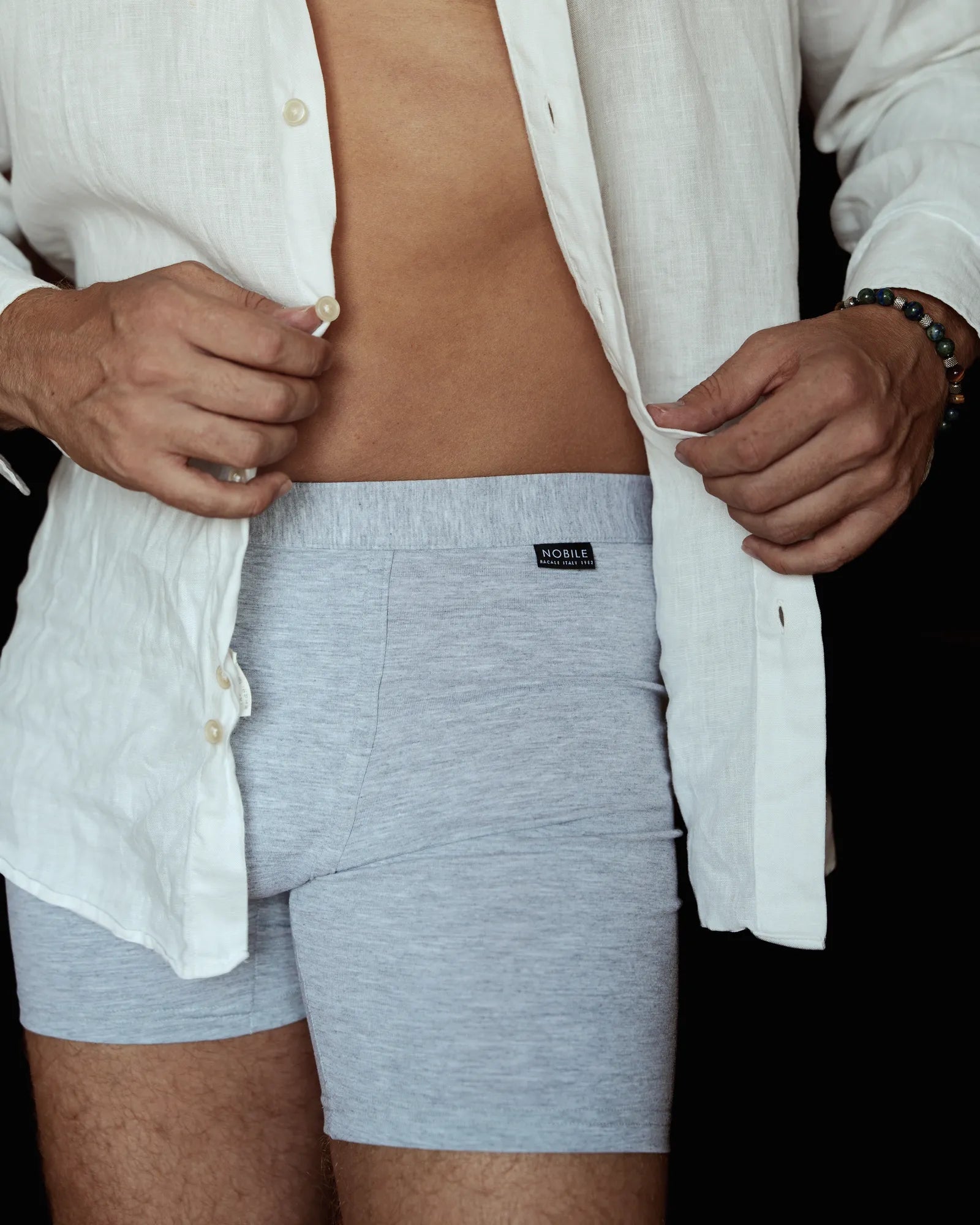
A well-designed waistband works differently. Ours is a covered elastic waistband: the elastic core never touches the skin directly, it's wrapped in extra-long staple Makò cotton, the same yarn as the garment, soft against the body. Its width spreads the pressure across a broad surface, so it supports without biting into the waist.
You can spot a good waistband by three concrete behaviours over time:
- it doesn't roll over on itself when you sit down or bend;
- it doesn't slide down, so you're not adjusting yourself mid-meeting;
- it doesn't lose tone after washing, staying elastic and snug over time.
Go back to the manager from the opening lines. When he unbuckles his belt at the end of the day, the skin above the hip stays smooth, no mark, no itch, because the pressure was spread evenly across all ten hours. The same goes for the surgeon on his feet since morning in the operating room, who never has to think about an elastic digging in with every move.
The garment's anatomical support matters here too, holding everything in place without compressing, so the fit doesn't rely on waist pressure alone. It's the same reasoning we apply to socks, as you can read in our piece on socks that stay up and why they hold their place.
Short Boxer, Long Boxer or Brief: Which to Choose
There is no single best style, only the right one for your body, for what you wear on top and for how your day unfolds. Three options cover almost every need, all in 90% extra-long staple Makò cotton and 10% elastane, with anatomical support, flat seams, a covered waistband that leaves no marks.
The Short Boxer Comfort (29.50 euro) is the all-rounder: it works under nearly everything, from jeans to chinos, from a suit to a relaxed weekend look. If you want one style to keep in the drawer without overthinking it, start here.
The Long Boxer Comfort (29.50 euro) is built against inner-thigh chafing, the irritation that ruins a long walk or a day on your feet. The longer leg stays put and doesn't roll up, so it works well under slim trousers, in summer and when travelling, during the many hours when you can't adjust anything. The thermoregulating cotton helps keep skin dry even after hours.
The Comfort Brief (27.50 euro) is the choice for minimal bulk. Under slim trousers or a tailored suit it creates no volume and no visible lines. The trade-off: it offers less anatomical support than the boxers and no anti-chafing protection, so it isn't ideal for anyone whose thighs tend to touch or for long walks.
A concrete example: someone facing ten hours on a ward or in an airport tends to prefer the long leg to avoid chafing by the end of the day, while someone wearing a made-to-measure suit at an event picks the brief for a clean line under the fabric. Every style comes in sizes M-XXL and in Navy, Black, Grey and White.
For the full detail on fit, hold and materials across the different shapes, we covered every model in our guide to men's underwear styles.
Short boxer, long boxer or brief: a quick comparison
| Criterion | Short Boxer Comfort (29.50 euro) | Slip Comfort brief (27.50 euro) |
|---|---|---|
| Bulk under trousers | Minimal, stays invisible under almost anything | None, the best choice with slim-fit trousers and tailored suits |
| Freedom of movement | High, with anatomical support | Maximum, zero excess fabric |
| Ideal occasion | Office, travel, versatile everyday wear | Made-to-measure suit, events, ceremonies |
| Works best under | Chinos, jeans, classic trousers | Slim trousers, tailored suit |
| Thermal comfort | Breathable and thermoregulating | Breathable, keeps body dry for hours |
| Worth considering | If your thighs rub, go for the anti-chafing long leg | Reduced coverage on the thigh |
The Anti-Chafing Long Boxer: Who Really Needs It
Inner-thigh chafing is one of those discomforts no one likes to mention, yet it affects plenty of men. A hot day, thighs touching with every step, and after a few hours the skin burns, turns red, and you end up walking awkwardly just to keep it from getting worse.
Picture a summer wedding: standing through the ceremony, photos in a sun-baked garden, then dinner. By mid-evening you already feel that sting on the upper thigh and spend the rest of the night shifting your weight from side to side. Or a trade fair, 12,000 steps between one stand and the next, and by closing time every stride is a small ordeal. Or a business trip made of trains, gate queues and meeting rooms, where stopping to adjust yourself simply isn't an option.
The long-leg Comfort boxer was built to close this problem. The leg extends below the critical line in extra-long staple Makò cotton with 10% elastane and forms a second skin: thigh no longer touches thigh, and the friction is gone. The elastane keeps the leg taut and snug, so it won't roll up or ride up as you walk.
The reason is mechanical. The fine-gauge knit reduces the rough surface that scrapes the skin, while the flat seams remove the inner ridges that, in an ordinary boxer, become the first point of irritation. Makò also stays breathable and temperature-regulating, keeping the skin dry after hours, in sizes from M to XXL.
This is where the gap from makeshift fixes shows. A synthetic boxer pulled on under your trousers slides, twists at the groin and traps heat, feeding the very thing you were trying to avoid. It isn't about size or body shape, but about real comfort on the days that count.
Breathability and Temperature Control: Dry Skin for Hours
Picture a surgeon or a manager: on their feet from seven, a train ride, three straight hours of meetings with heat outside and air conditioning inside. After ten hours, the gap between ordinary underwear and a well-built piece shows up exactly where it matters, against your skin.
The main credit goes to extra-long staple Makò cotton, with filaments over 35 mm against the 25-28 mm of ordinary cotton. The longer the fibre, the fewer joins in the yarn: it pulls moisture away from the skin instead of trapping it. You feel it instantly, a smooth, cool, compact hand, without the rough film of short-staple cotton.
We use 90% of this cotton with 10% elastane: enough cotton to breathe, enough elastane to hold its shape.
Cheap synthetics do the opposite. They hold heat and moisture against the body, and through a manager's long hours, those ten stretches with no real break, they build the warm, damp environment that makes you feel overheated and encourages odour. It isn't personal hygiene, it's the material letting nothing evaporate.
Knit density matters too. The Boxer Comfort uses a tighter, more structured knit, for support and hold on the leg; the Slip Comfort a slightly lighter, airier knit, where the garment only needs to wrap without covering. You can tell by touch: a quality knit snaps back into shape the moment you stretch it between your fingers, it doesn't stay slack.
No medical promises, just genuine everyday comfort: skin that stays dry longer, even when the day gives you no break.
Real Durability: 200 Washes Without Losing Shape
Comfort shows on day one. True quality shows months later: when a garment has already been through dozens of washes and still looks like new. This is where many prestige brands fall short. Boxers you paid a premium for because of the logo, that lose their elasticity, fade or stretch out at the legs after just a few weeks.
Our boxers are built to withstand up to 200 washes while keeping their shape and color. In practical terms: worn and washed once a week, a single piece lasts years, not seasons. Do the math honestly and the real saving becomes obvious.
A cheap 10-euro boxer that loses its shape after one season needs replacing three or four times a year. A quality piece at 29.50 euro that stays intact for years costs less over time, and gives you a fit every single day that the other one never had. Durability isn't a technical footnote, it's arithmetic.
What makes a garment last this long? Not luck, but precise choices:
- Extra-long staple Makò cotton: longer fibers create a compact yarn that breaks and pills far less.
- Coated elastic waistband: the elastane shielded by cotton won't dry out or lose tension after washing, so the waist stays firmly in place.
- Robust flat seams: joins that don't pull, don't open up and don't mark the skin even after ten hours.
- Stable dyeing: Navy blue, Black, Grey and White stay deep, without that washed-out look that gives away a tired garment.
To make them truly last, a few habits are enough: wash at 30 degrees, moderate spin, no fabric softener (it saturates the fibers and reduces breathability) and air dry without a high-heat dryer.
The Box of 6: For Those Who Want to Simplify
There's a precise moment when underwear becomes a problem: you open the drawer and find mismatched pieces, stretched-out elastics, colors that no longer hold up against a crisp white shirt. The Box of 6 was made to close that chapter. You rebuild the whole drawer in one move and start from a consistent base, every piece at the same level.
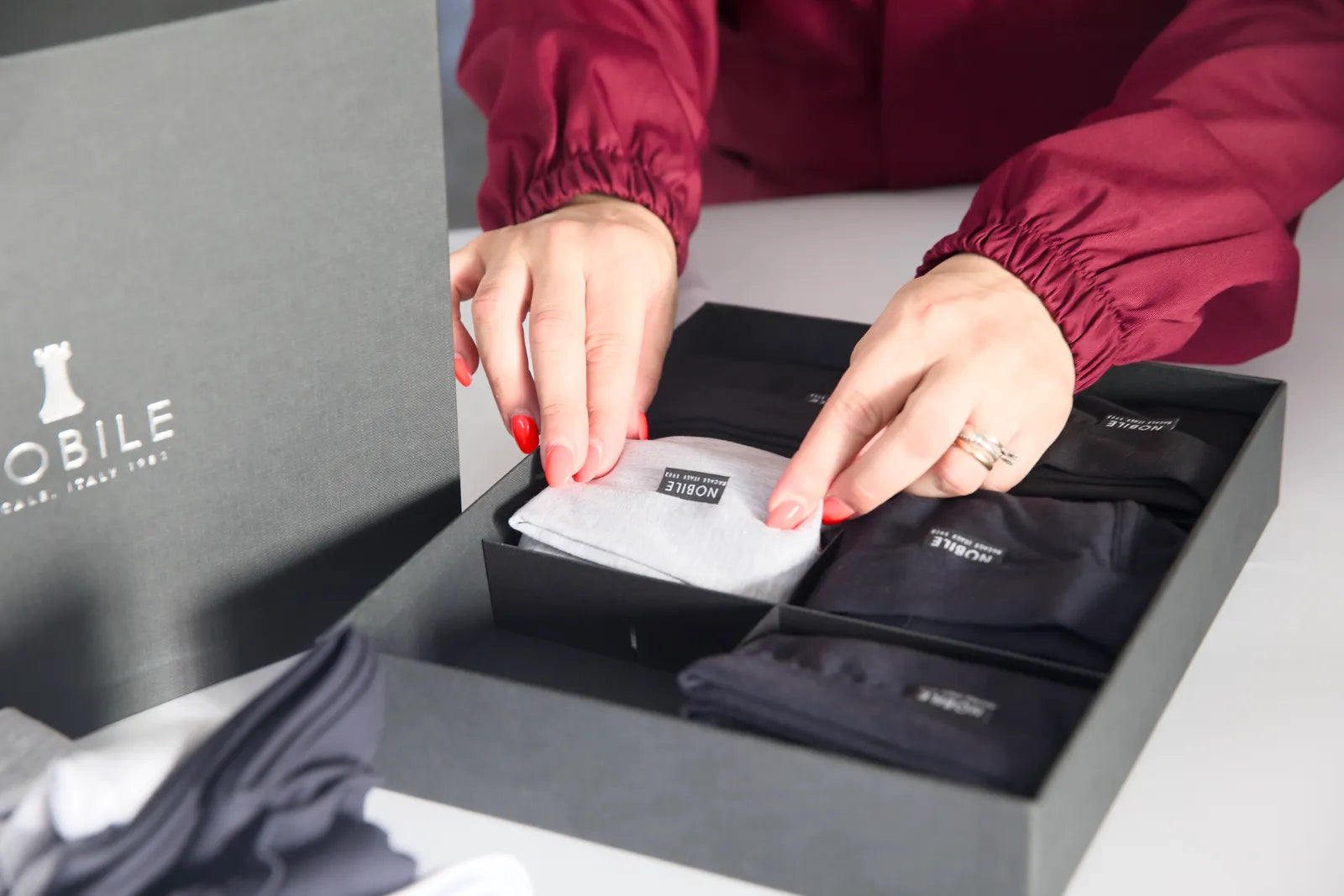
The idea is to remove one micro-decision from your day. With six identical pieces you always have a fresh one ready, even on late-laundry days or when the suitcase gets packed at the last minute. You choose between two formats: the Box of 6 Comfort Boxers at 147.50 euros and the Box of 6 Comfort Briefs at 138.50 euros, both with real savings compared to buying single pieces.
The math is simple. Six boxers bought one by one at 29.50 euros each would be 177 euros: in the box you pay 147.50, nearly thirty euros less. The same goes for the brief, from 165 euros down to 138.50. It isn't a shop-window discount, it's the natural advantage of standardizing on the best instead of chasing fragmented purchases.
Every piece keeps the same composition: 90% extra-long-staple Makò cotton and 10% elastane, with flat seams and a covered waistband that leaves no marks.
The box comes in sizes M to XXL and in the four collection colors: navy blue, black, grey and white. You can build a single-color drawer, handy if you love absolute order, or mix the shades so you always have the right match under your suit. Each piece lasts up to 200 washes keeping its shape and color, so the consistency holds over time.
If you're still unsure which model to pick before choosing the format, start with our guide to men's underwear styles: once you've found the right cut, the Box of 6 turns it into your standing supply.


Made in Italy vero: dove e come nasce
The "Made in Italy" label carries weight, and it doesn't always tell the full story. There's a real gap between a garment designed, built and inspected in Italy and one that is Italian only on the tag. The second sounds good, but you don't feel it where it counts, right against the skin.
A truly Italian product doesn't settle for a token finishing step. It selects the raw material, builds it, stitches it and checks it within a supply chain you can trace stage by stage. Our knitwear is made in Italy, with artisan construction, not just finished to earn a stamp.
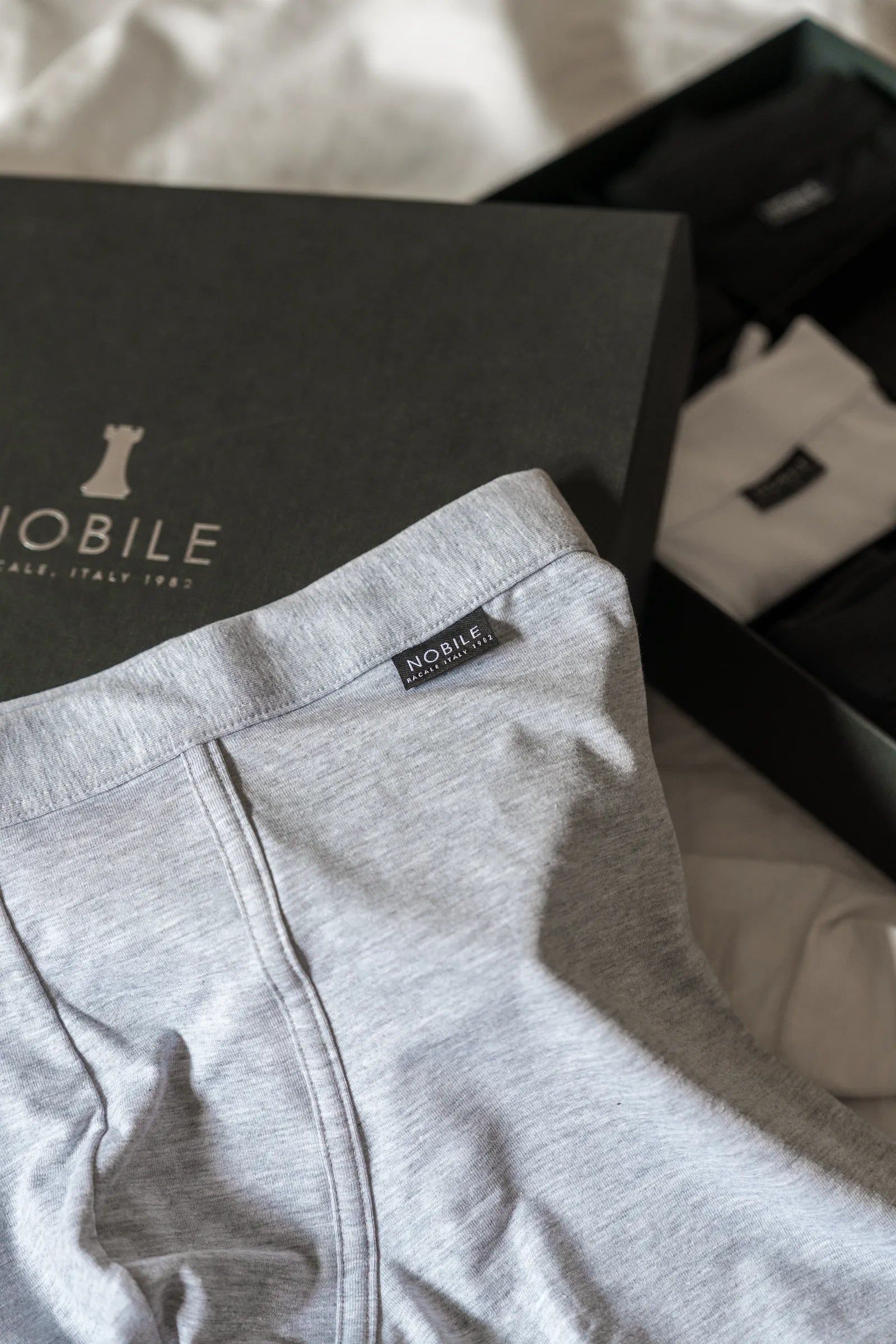
Nobile Italy 1982 began in 1982 as an artisan sock maker in Racale, near Lecce. A sock is a demanding garment: it stays against the skin for ten hours or more, it has to stay dry, stay up, and leave no red mark by the end of the day. When you work on something that strict every day, you learn fast what truly matters on the skin.
What we carry from socks into underwear isn't the machinery, it's the way we judge a garment. The same criteria described in what makes a men's sock genuinely well made, applied to a piece worn all day long.
In practice, that approach shows up in precise choices:
- Yarn: 90% extra-long staple Makò cotton and 10% elastane, the same thinking about raw material we apply to our socks (why the right cotton makes the difference).
- Hidden details: flat seams and a covered elastic waistband, the same principle that holds a sock up without squeezing.
- Durability: structure and color that hold up to 200 washes while keeping their shape and color.
This is how we read accessible luxury: no visible logo, plenty of substance where the skin feels it. If you want the reasoning behind every choice, you'll find it in the philosophy of Made in Italy.
Mistakes to Avoid When Choosing Underwear
Most disappointments come from a handful of recurring mistakes. None is serious on its own, but together they turn something you wear every day into a small, constant annoyance. Here are the ones we see most often, each with a practical fix.
- Buying on low price alone. A cheap multipack wears out fast and loses shape. Think in cost per year, not sticker price: a piece that survives 200 washes keeping its shape and color costs less than three disposable packs.
- Ignoring the fabric blend. 100% polyester traps heat and moisture, and you feel it by evening. Look for a natural cotton base with a small share of elastane for recovery: our choice is 90% extra-long staple Makò cotton and 10% elastane.
- Getting the size wrong. Too tight pinches and marks the skin, too loose rolls up and slips down. Measure your waist and trust the size chart (we run from M to XXL) instead of guessing.
- Trusting the logo over the yarn. A brand name on the waistband tells you nothing about breathability or durability. Check the raw material and where it is made: they matter more than any visible print.
- Washing it badly. High temperatures and fabric softener ruin elastane and shorten the garment's life. Wash at 30 degrees, skip the softener, air dry.
- Not checking the seams. Thick seams chafe on thighs and waist. Look for flat seams that disappear under trousers and stay unnoticeable after hours seated.
Two details deserve extra attention. The waistband decides whether you end the day with a red mark: a coated, well-sized elastic holds without squeezing, following the same principle behind socks that stay up.

How to Choose the Right Size
The right size is the one you don't feel. When a piece disappears on you, it fits without squeezing and supports without compressing. Across our range, from M to XXL, the starting point is always your waist measurement, not your weight or height.
Measure your waist where the elastic usually sits, without pulling the tape tight and without leaving it loose. That number, matched against our size chart, gives you the correct fit. If you tend to wear your trousers a little lower, measure there: that's where the underwear will actually work.
What happens when you get it wrong? It happens to everyone, but the signs are clear:
- Too tight: the waistband marks the skin, the boxer leg rides up, and the fabric loses its softness because it's constantly under tension.
- Too loose: you lose the anatomical support, the piece shifts as you move and tends to slide, the exact opposite of the comfort you want through a long day.
This is where the 10% elastan blended with 90% extra-long staple Makò cotton comes in. That small stretch percentage creates an enveloping fit that adapts to different builds within the same size, following the body in motion and always springing back into shape. It's the same idea behind socks that stay up without pinching: hold without constriction.
Caught between two sizes? Here's how to decide. If you prefer a firm, second-skin fit, go for the smaller one. If you like a freer feel or your waist sits just above the threshold value, size up: the coated waistband stays comfortable and leaves no red mark either way.
A well-made choice shows from the first wear and confirms itself day after day, because the structure of the piece stays stable over time. The right size is the first step toward comfort that lasts all day, and it deserves the same care that goes into making these pieces.
Glossary
Glossary of the right size
A few clear terms to choose without mistakes, from M to XXL.
Waist basics
The horizontal measurement taken at the waistline, where the band sits. It's the main reference for choosing your size between M and XXL.
Enveloping fit signature
A fit that follows the body without squeezing. It hugs evenly and supports without compressing the skin.
Elastane
The elastic fibre present at 10% in our garments. It ensures shape recovery and adapts to different builds within the same size.
See also: Comfort Briefs in Makò cotton
Too tight mistake
When the size is smaller than it should be, the fabric marks the skin, rolls up on the thigh and loses comfort as the day goes on.
Too loose mistake
A size up doesn't support, tends to move and loses the anatomical function of the garment. Best avoided if you want a close fit.
Covered waistband
The elastic band wrapped in cotton that closes the garment at the waist. It stays stable without leaving a red mark at the end of the day.
See also: Comfort Boxer long leg in Makò cotton
Anatomical support
The construction that follows the body's shape and keeps the garment in place during movement, even on long days.
See also: Comfort Boxer short leg in Makò cotton
When in doubt between two sizes tip
If your waist falls between two measurements, choose by preference: the smaller one for a firm fit, the larger one for a softer feel.
M-XXL range
The range of sizes available for our boxers and briefs in Makò cotton. Four sizes designed to cover most builds.
No term found. Try another word.
Frequently asked questions
How do you recognize quality men's underwear?
You recognize it by the fiber, the seams and the waistband. A quality piece uses extra-long-staple cotton like Makò, has flat seams that neither mark nor chafe, and a covered elastic waistband that doesn't dig in or roll. It also keeps its shape and color after many washes, a sign of good yarn and good construction.
What is the best fabric for men's underwear?
Extra-long-staple cotton, like Makò, is among the best: it's smooth on the skin, breathes, regulates temperature and moisture and resists pilling. A small amount of elastane (around 10%) adds anatomical support without constriction. Cheap 100% synthetics, by contrast, trap heat and moisture, encouraging odor.
Why does underwear leave a red mark on the skin?
Because the elastic is too tight or low quality and concentrates pressure on a thin line. A well-designed, covered elastic waistband spreads the pressure over a wider band, so it doesn't mark or roll. A wrong, too-tight size can also cause the end-of-day mark.
Short boxer, long boxer or briefs: which is better?
It depends on your body and your use. The short boxer is the most versatile and works under almost anything; the anti-chafing long boxer is ideal if your thighs touch, for slim trousers and for days on your feet or in summer; briefs offer minimal bulk under fitted trousers and tailored suits. Many choose the style based on the situation.
How long does a good-quality boxer last?
A well-made Makò cotton boxer with a covered waistband can last up to 200 washes while keeping its shape and color. That means years of real use, provided you wash it carefully, at low temperatures and without harsh fabric softener. Over time it costs less than three cheap pairs replaced every season.
How do you wash cotton-elastane underwear without ruining it?
Wash at low temperatures, around 30 degrees, with a gentle detergent and avoid fabric softener, which over time damages the elastane and reduces the waistband's stretch. Air dry rather than tumble drying at high heat. These small habits preserve shape, color and comfort for years.
Does a long boxer actually help against chafing?
Yes, especially if your thighs touch when you walk. The long-leg boxer in Makò cotton with elastane creates a second skin that stays put and doesn't roll, reducing skin-on-skin friction. It's particularly useful in summer, on high-step days and during business travel.
Why choose Made in Italy underwear?
Because authentic Made in Italy, chosen with care from the raw material to the construction, makes a real difference on a garment that touches your skin all day. Nobile Italy 1982 was born as an artisan sock maker in Racale, in Salento, and brings the same criteria to its underwear: fine fibers, carefully crafted hidden details, comfort above all. It's accessible luxury, without ostentation.